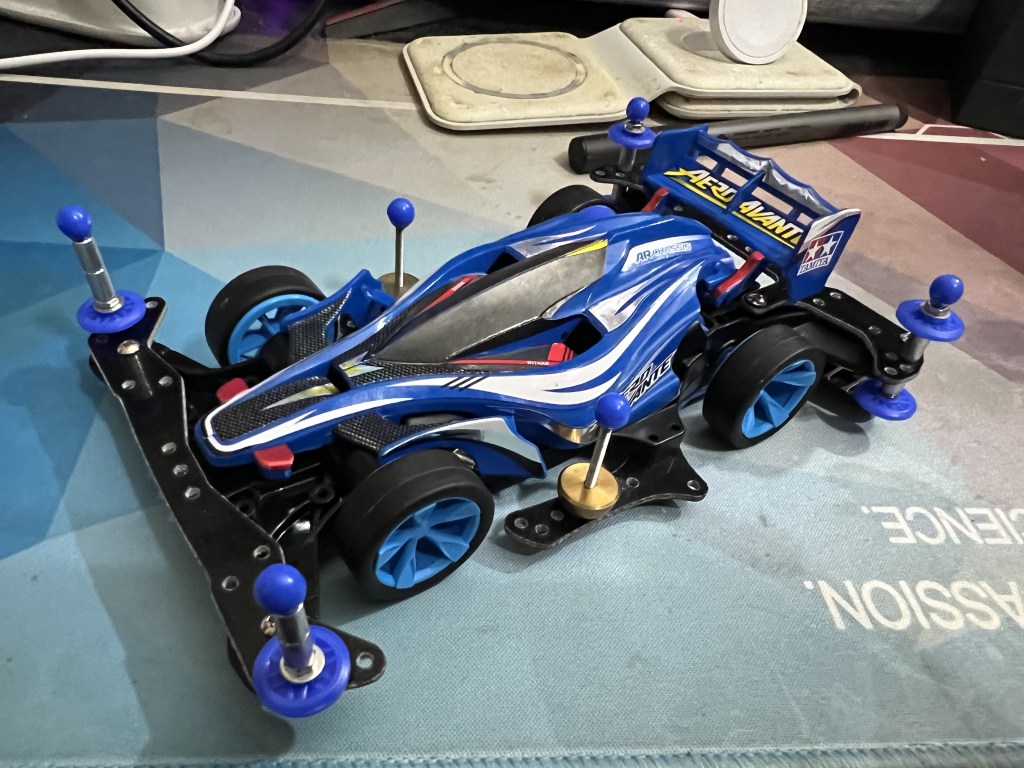
After my first two builds, I started paying closer attention to the boxes themselves. Most of what’s written on them is in Japanese, so I had to rely on context clues and a lot of Googling in between. This time, I wanted my next build to be all about the experience. And of course, I wanted to try a different chassis.
We went back to Brickyard, but this time I wasn’t racing against closing time. I took my time walking up and down the shelves, looking at every kit and wondering which one would be the most fun to build.
Then I saw this beauty.
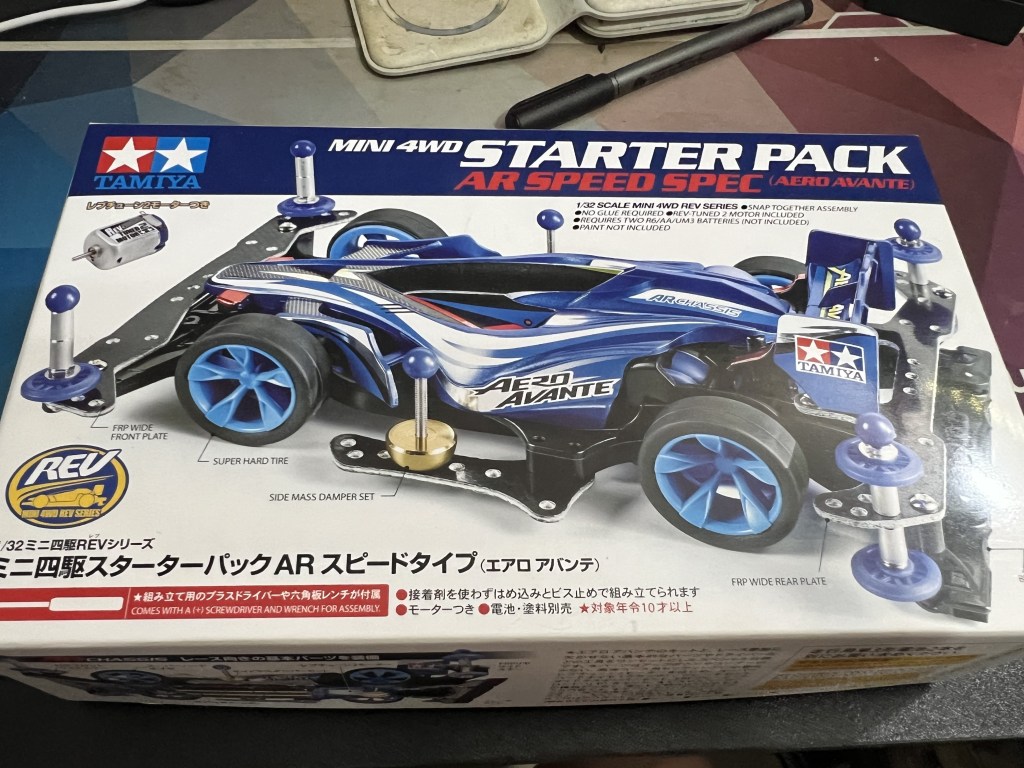
“Look at all the bells and whistles on this thing!”
I remember staring at the box thinking, What ARE those poles? Is that a gold weight? Why are there blue balls on top of them? There was so much happening on the artwork alone that I barely knew where to start looking.
Then I noticed one of the few English phrases on the box.
Mini 4WD Starter Pack.
“Starter Pack?” I figured that meant it was meant for beginners. But judging from everything strapped onto the car, this looked anything but basic.
It was also almost twice the price of my first two kits.
Then I looked at the side of the box.
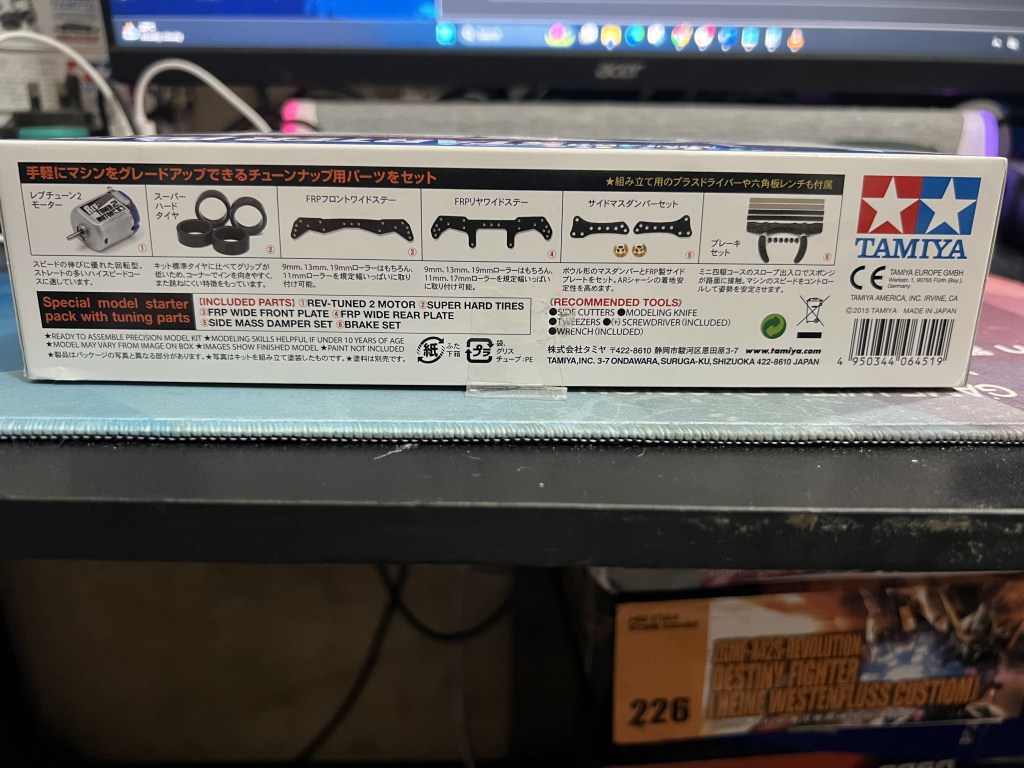
It was exactly what I was looking for. The side panel listed everything included in the box: FRP plates, rollers, mass dampers, brake sponges, and even different motor.
More parts meant more things to build. More things to tinker with.
At that point, the price didn’t even matter anymore.
I bought it without a second thought.
When I got back to my fiancée’s place and opened the box, it finally clicked.
This wasn’t just another Mini 4WD kit.
It was Tamiya’s way of saying, “You’ve built a couple of cars. Now let’s show you how racers build theirs.”
I’ve never really been interested in racing. For me, building has always been the fun part. But looking at everything inside this box, I finally understood why people spend hours tuning these little cars.
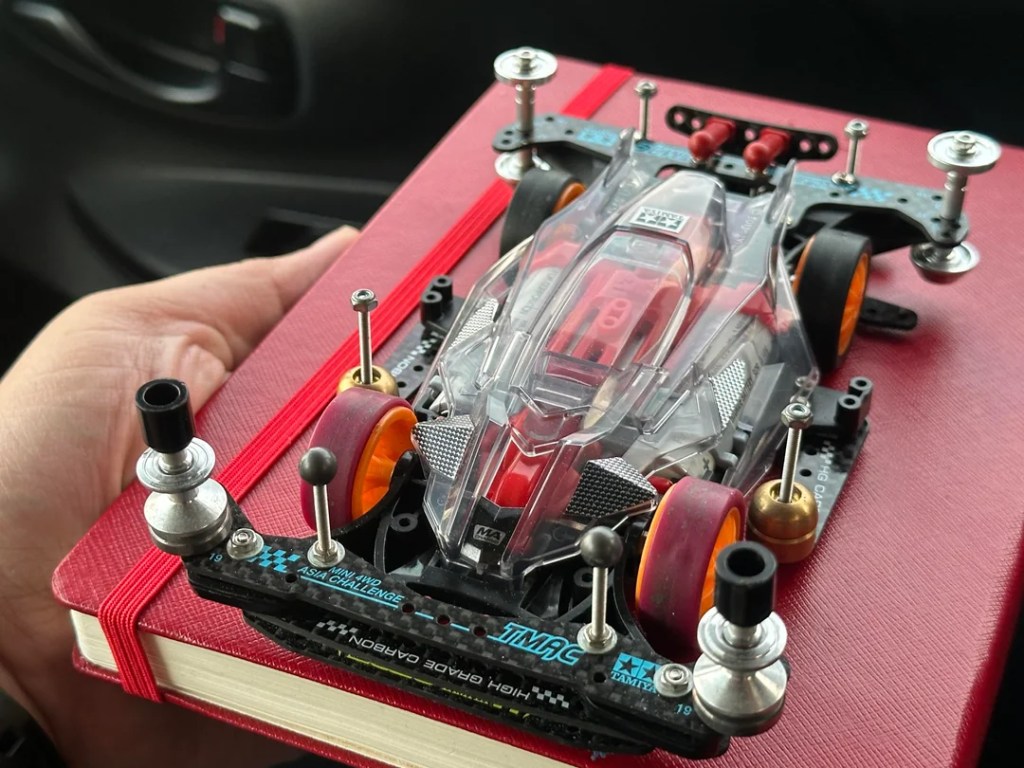
Bigger bumpers. More rollers. Gold weights. Different wheels.
The deeper I looked, the more I realized that racing wasn’t just about putting in a faster motor and hoping for the best.
That’s when I discovered BMAX.
Until then, I assumed competitive Mini 4WD was simply about making the fastest car possible. Instead, I found a whole world of balancing speed, stability, braking, cornering, and setup choices. It reminded me of building a character in a video game. Every part had a purpose.
Then I noticed something else hiding in the box.
Not just extra parts…
Extra tools.
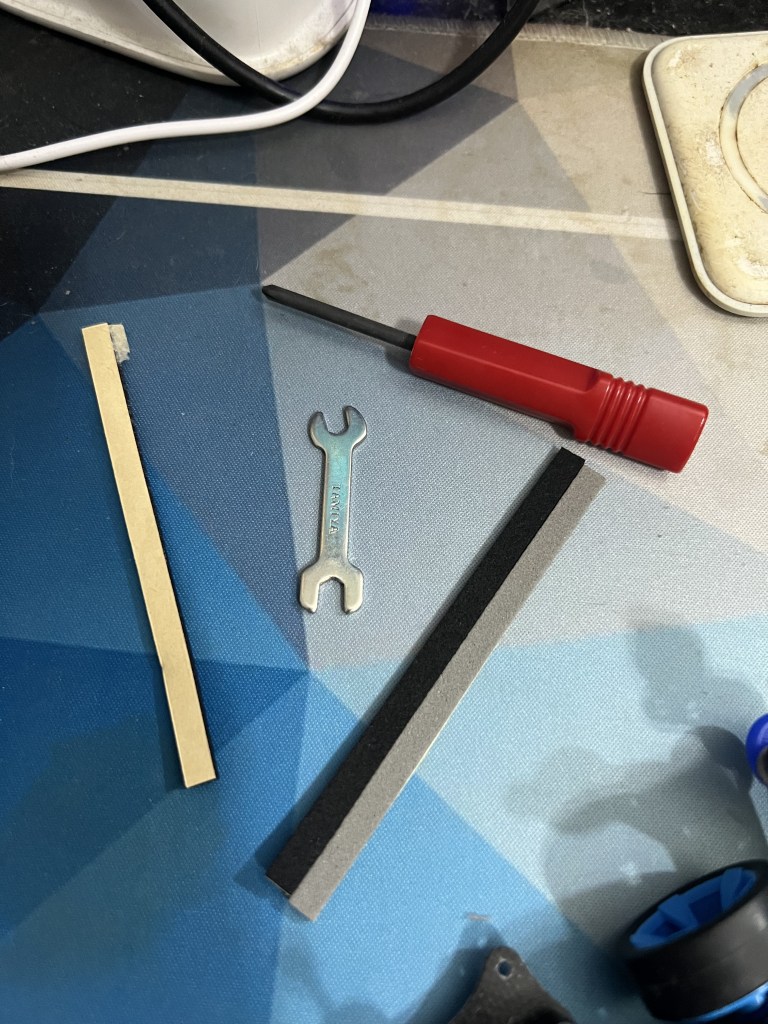
“How generous,” I thought.
By this point, I couldn’t wait to start building.
My fiancée left for church, leaving me with a few uninterrupted hours. This was also the first time I’d built a Tamiya somewhere other than home, so I made sure to keep everything neat.
The build itself took almost three times longer than my first two kits.
Halfway through, I hit a moment of confusion.
The batteries weren’t on top of the chassis.
They went underneath.
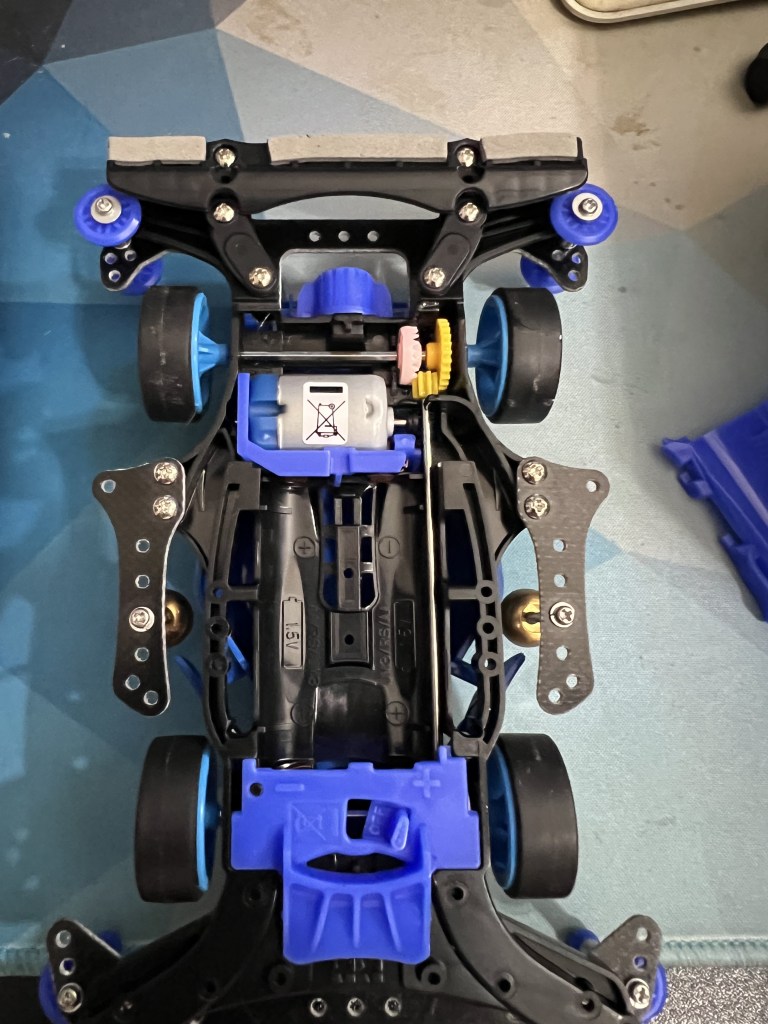
It turns out that’s one of the defining features of the AR Chassis.
Need fresh batteries? Just open the underside.
Need to swap the motor? Same thing.
No need to remove the body every single time.
“This really is a racer’s car,” I remember thinking.
Little design decisions like this are what pulled me deeper into the hobby. Someone at Tamiya had clearly spent countless hours thinking about how to make maintenance easier without sacrificing performance.
I found myself appreciating the engineering almost as much as the finished car.
Speaking of engineering…
This was also my first encounter with a different kind of motor.
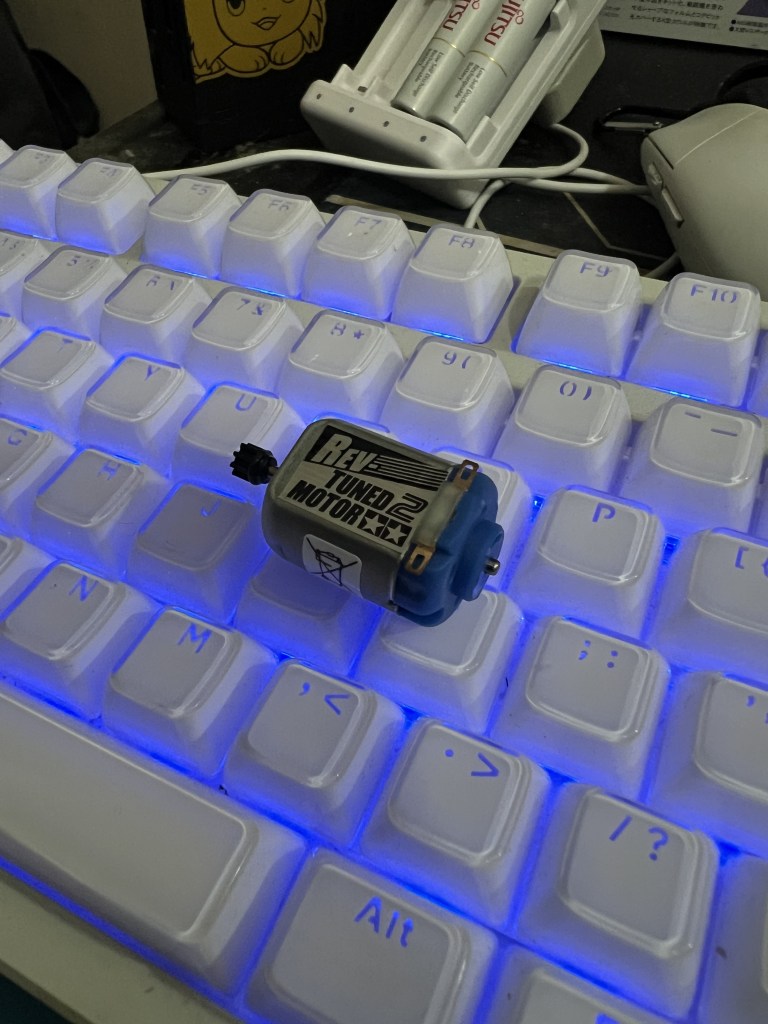
My previous two kits came with the standard motor, so seeing the Rev Tuned included in the Starter Pack immediately caught my attention.
Naturally, I Googled it.
That rabbit hole introduced me to something I hadn’t even considered before: there wasn’t just one motor.
There were motors designed for top speed, motors with better torque, motors that accelerated differently, and motors that balanced everything in between.
It felt less like buying replacement parts and more like unlocking skill trees in a video game.
Every answer I found seemed to lead to three more questions.
And honestly…
I loved that.
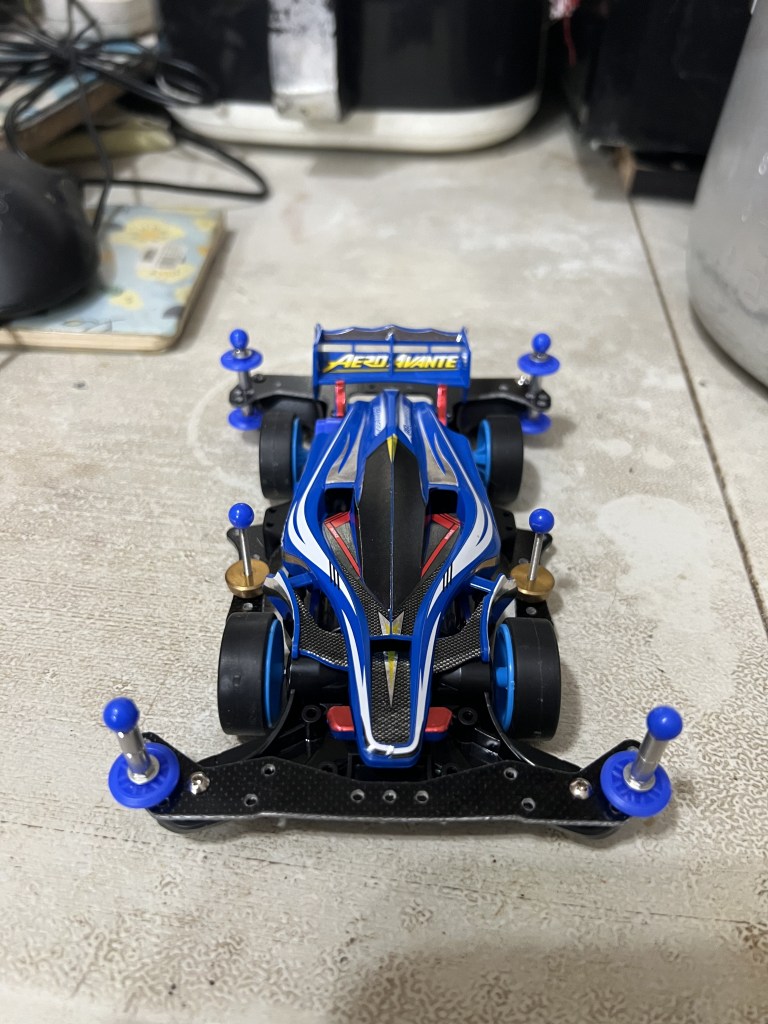
After what felt like forever, Aero Avante was finally complete.
Without question, this was the most fun I’d had building a Mini 4WD.
When I first got into this hobby, I thought I’d only enjoy putting the cars together. That’s why I was drawn to the Starter Pack in the first place. I assumed it would simply give me a longer build.
Looking back, it gave me something much bigger.
It introduced me to tuning.
It introduced me to racing culture.
It introduced me to the idea that a Mini 4WD is never really finished.
I thought I was buying another model kit.
Instead, I bought my ticket deeper into the rabbit hole.
Historian’s Note
Looking back, Aero Avante marked the biggest turning point in my journey so far.
Geo Glider introduced me to Mini 4WD.
Ray Stinger made me curious about chassis.
Aero Avante taught me that the build doesn’t end when you tighten the last screw.
It showed me that every roller, every motor, every plate, and every tiny adjustment is part of a much bigger conversation about engineering. I still considered myself a builder more than a racer, but this was the first time I truly understood why people spend hours perfecting cars that fit in the palm of your hand.


Leave a Reply